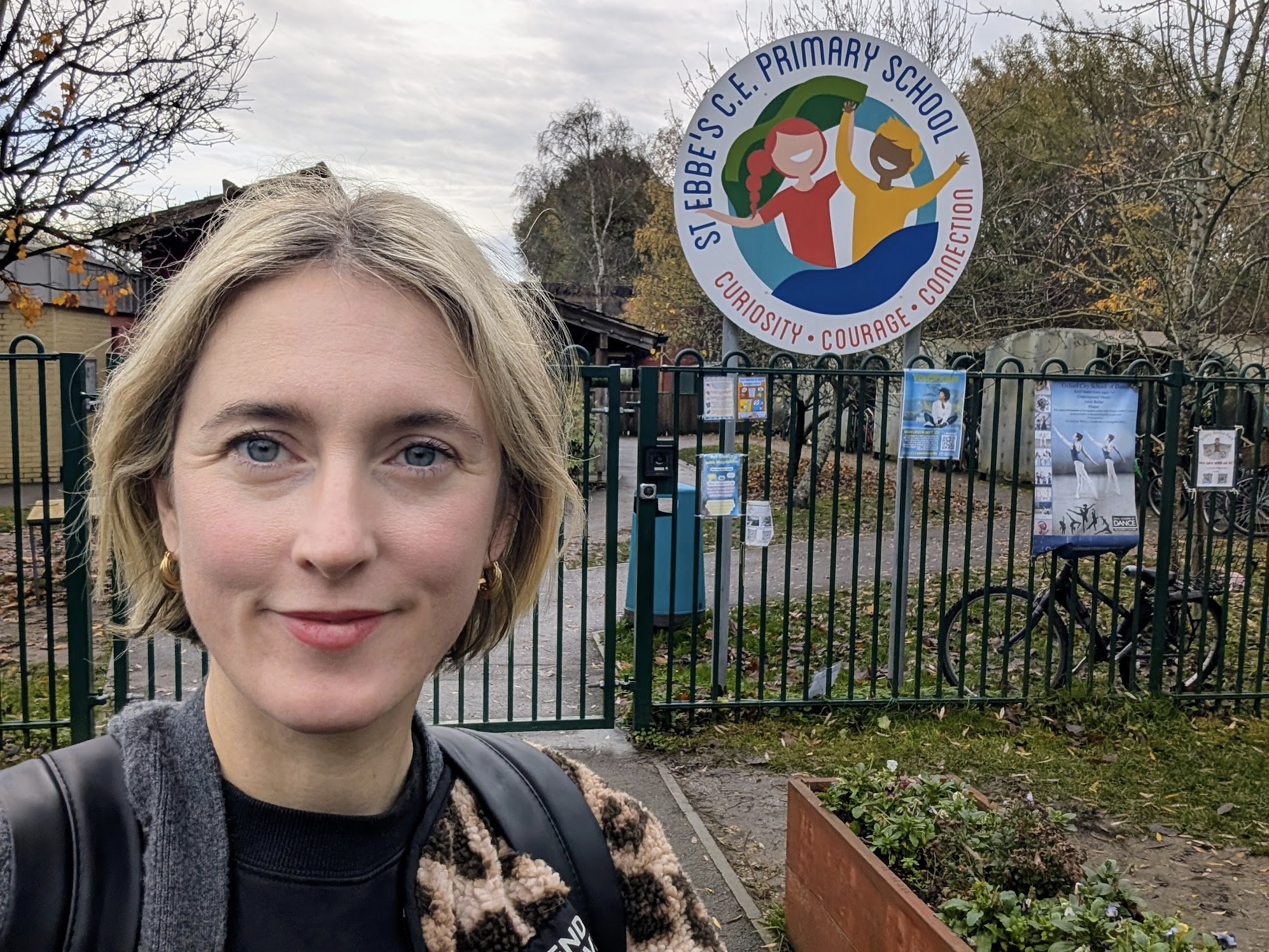
Arriving at St Ebbe's
Tina Farr and her team have set tongues wagging about their primary school in Oxford. Since The Guardian ran a piece about "the headteacher bringing play back to the classroom" it has firmly cemented St. Ebbe's place on the map as a school that is meeting statutory requirements and putting wellbeing at the heart of their approach. Despite Tina and Clare's reluctance to use the word revolution, in a system that feels it is tightening its grip, it certainly feels like this. Vibrations of their approach have not only reached locals but St Ebbe's is making its way across the UK with a high take up for their staff training on play-based approaches, "we had people in from London, Bristol and Stockport last time " along with a swarm of educationalists showing interest.
10 minutes from the city centre, St Ebbe’s is set back on a residential street lined with trees and free from traffic. As I sat waiting for Tina to show me around I spotted a quote from a child displayed on the wall “we’re not just kids at this school, there’s nothing just about us”. What I see backs this up.
I initially met with Deputy and Co-Head, Clare Whyles, who spoke to me about her journey at St Ebbes, most of the team that I speak to have been here a long time. We discuss falling birth rates and pressures to fill spaces - it is a universal problem and one that feels out of our control to some extent, but Clare speaks openly about school tours and sharing their good practice with the families they meet. She tells me about the previous afternoons “check-in” (part of the weekly staff training sessions) - “we all sit in a circle with snacks and a plant in the middle - this acts as a diffuser for the empty space in between" she explains. “It's a chance to ask how's it going?”. The check-in is one example of a place where vulnerability is encouraged and change is accepted as a long term and organic movement and embedded with consideration, and with compassion.
Tina has previously spoken about her need to dispel the myth that you are either traditional or progressive (listen to my podcast recording with Tina here) and believes education is a lot more nuanced than that. In their plight to really understand the shades within what is a complex organic system, they recently held a governor led workshop to help them pick apart their approach and further explore their intentions and understanding of it. In this vein Tina also thanked me for my visit - “It helps me to think clearly about what we are doing here” she earnestly shares. This reminds me of my visit to Ben Levinson's school in Newham - the absence of micromanaging and time wasting initiatives means that trust is key and with this you might not know what is happening every second of the day and therefore constant reflection is essential. More on this in my upcoming book, Teacher Autonomy.
As I walk around the school it feels like Tina and I are walking around her family home - she walks in and out of classrooms, corridors and playgrounds comfortably - nobody is performing - Tina is a consistent and supportive presence. The children and staff navigate the school with a comfort and ease that I have not seen in a setting before.
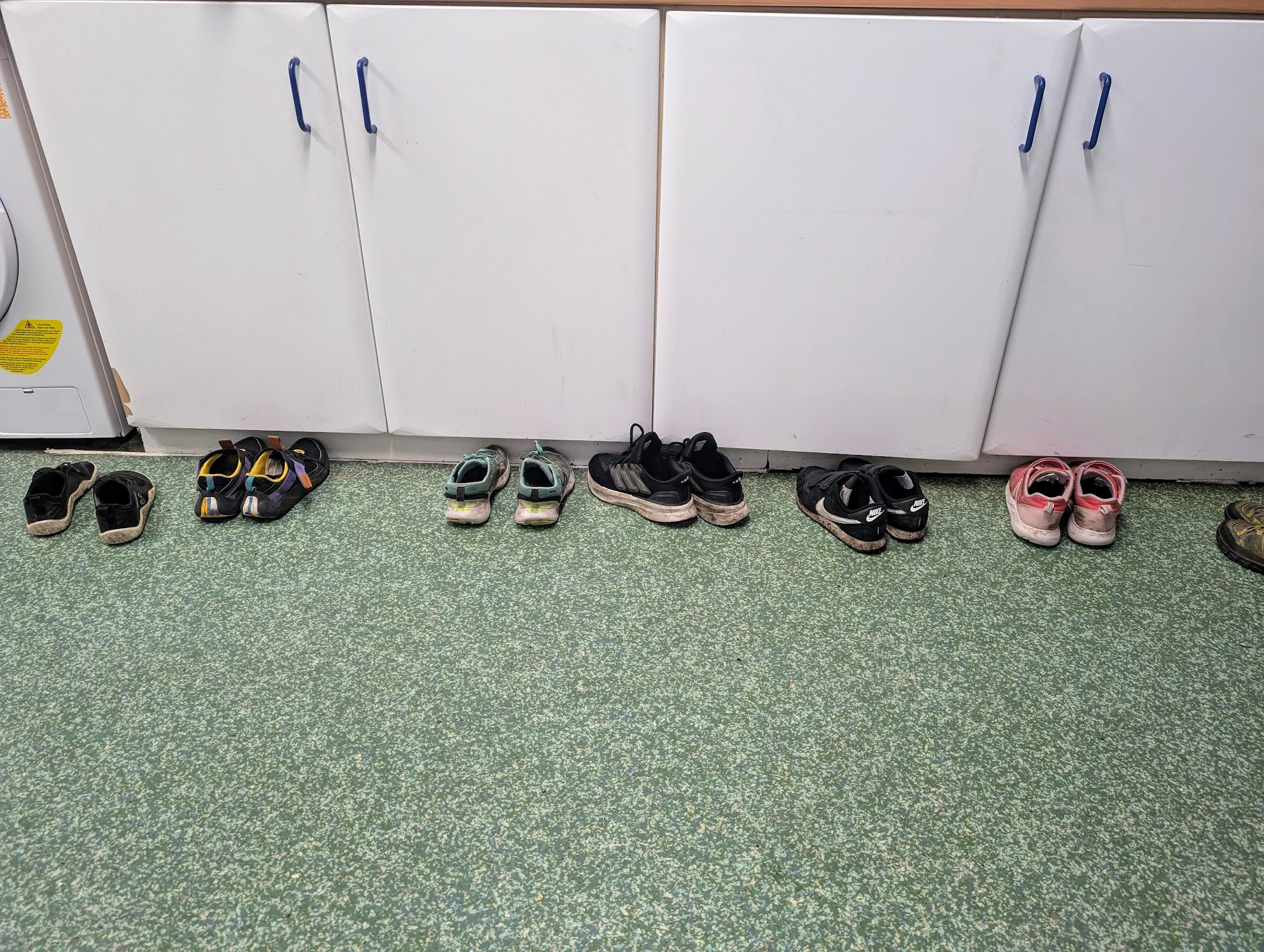
The children remove their shoes for pure comfort in the library
Tara, the year 2 teacher, is behind the deep work on KS1 play at St. Ebbe's - her desire to take play with her when she was moved from reception into year 2 was one that was supported and nurtured. "We cover the National Curriculum, I still teach directly but the play is always there" is something Tara shares when talking about her approach. The space is filled with loose parts, blocks, a mix of adult guided tasks and free-flow masterpieces including the model of Oxford's Christchurch College and meadow depicting knowledge recently gained, you can see below - a piece carefully created and labelled that morning by a child during their initial play session - "it's a waste of time sitting them down for the register when I can just do it" - upon arrival, the children go directly to their play session for 30 minutes. It was a decision made for maximum impact, one that recognises that "play is one of the only places where children are actively able to mix the realms of fantasy and reality, either as a solo experience or alongside others" and that "lots of opportunities to do this will equip children not with the solutions to every eventuality they will come up against, but the strategies for problem solving and a wealth of experience to draw upon." (Bryce-Clegg, A. 2020.)
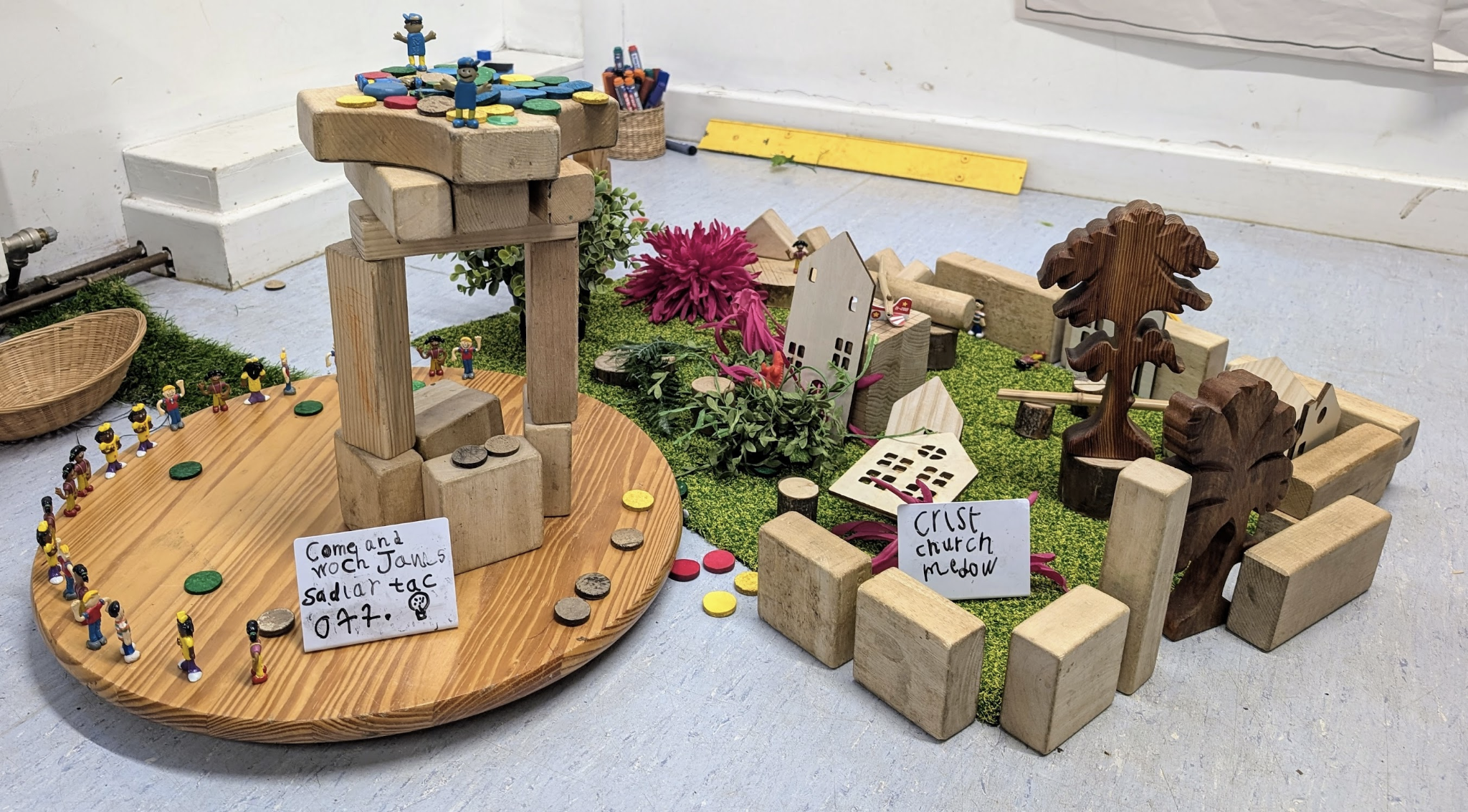
Year 2. Oxford's Christchurch College and meadow
If you are wondering where they fit in a maths and english direct teach then fear not - they have a very clear timetable, “there are some things that children need to be taught” and Tara does this through something she names “relentless referencing” (referring to things such as continents, time and days of the week etc) and discrete teaching sessions. Learning is something that is in every moment - Tara shows me a visual timetable card that was created by a child who recognised its absence - a purposeful writing and sequencing activity.
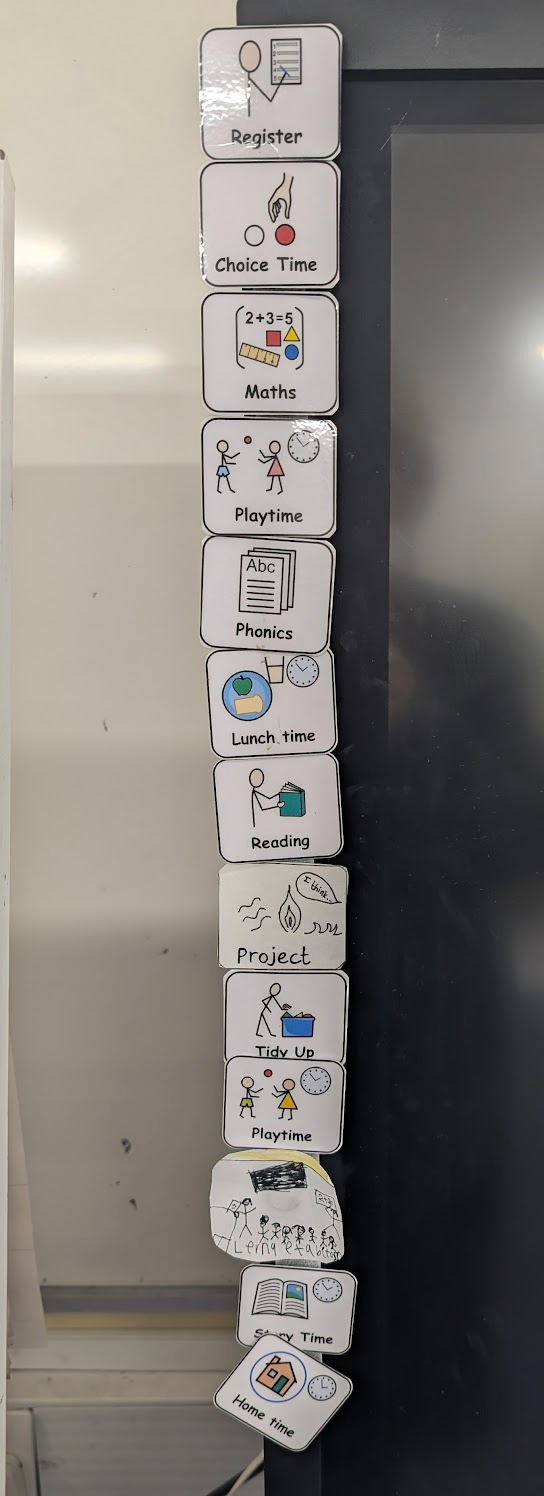
A visual timetable for Year 2
Year 3 is trialling including an element of self-directed learning for the first time - this cohort had a play-based approach to the end of Year 2. The carpet area is made up of cushions and benches - they call it the “meet and greet area”. Simon, their class teacher, speaks honestly about his journey with this new approach - the children initially challenged his teacher-directed morning activities, requesting more autonomy at the start of the day as they had experienced previously in year 2. He very quickly realised the need to work with them in a democratic way on developing a balance. They came to an agreement that was comfortable for all: autonomy on entering the classroom but a quick transition to the carpet and lesson input at 9am sharp. The buzz was undeniable - the children were learning about Skara Brae, a prehistoric Neolithic village on the Orkney Islands in Scotland. One focused writing group was working with the class teacher whilst others stood at stand up desks and sat on beanbags with lap trays modelling clay. They were encouraged to note challenges they encountered with the clay and overcome them by sharing and problem solving together. I could hear nothing but focused, rich and engaging conversation. I had so far noted an absence of chaos at St Ebbe’s and predicted that if I was going to find it anywhere it might be here. I was off the mark.
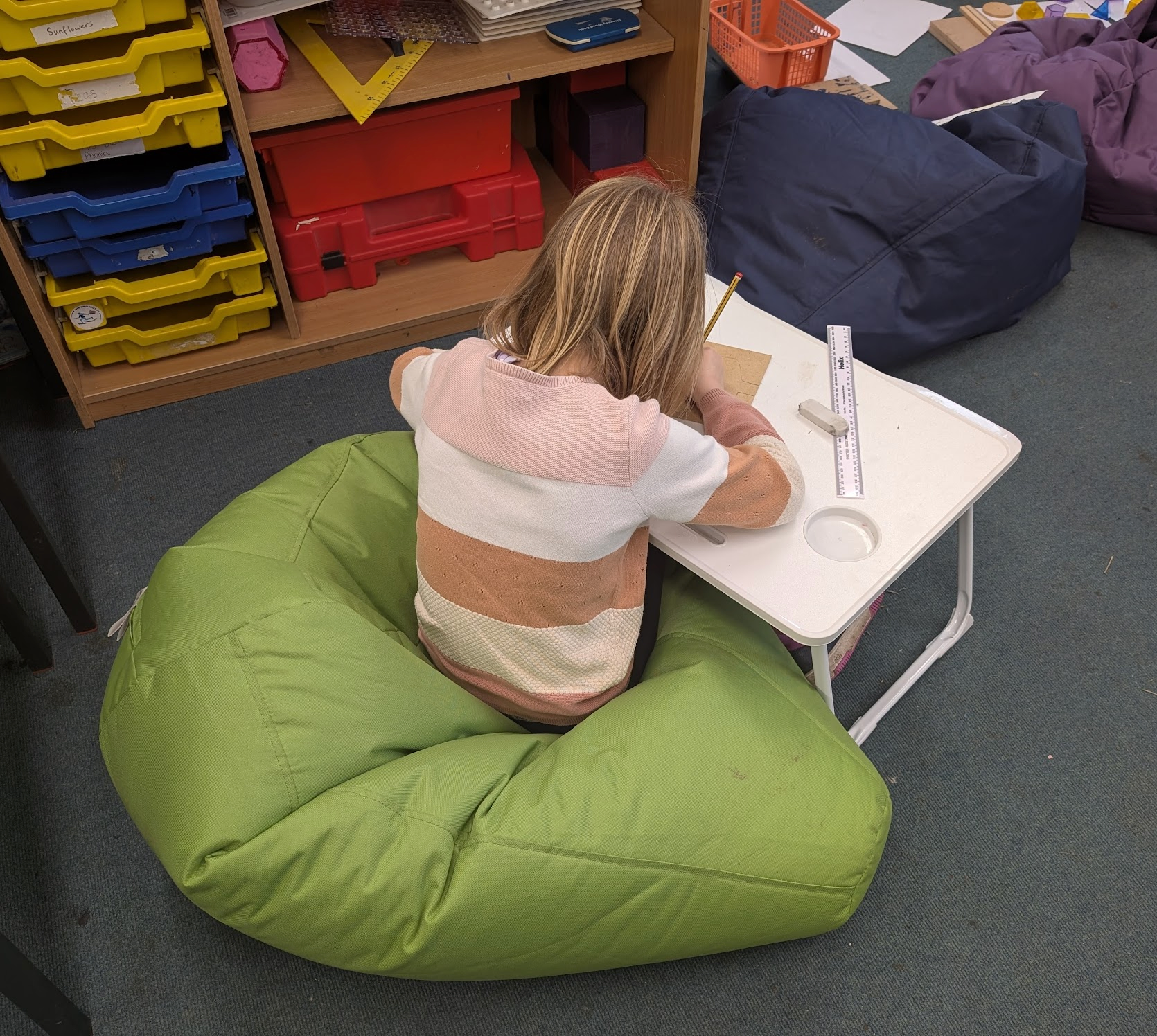
“This isn’t about furniture—it’s about autonomy.” Tina Farr.
Nothing here is one size fits all - what is being used in one classroom will not necessarily be used in another - you can forget the prescriptive border colours, table arrangements and timetables. Tina is well aware that change can only be supported by her through training and experiences and recognises that real investment has to come from her teachers. Autonomy is key. She plants the seeds, waters them and has learned to wait patiently as they begin to grow.
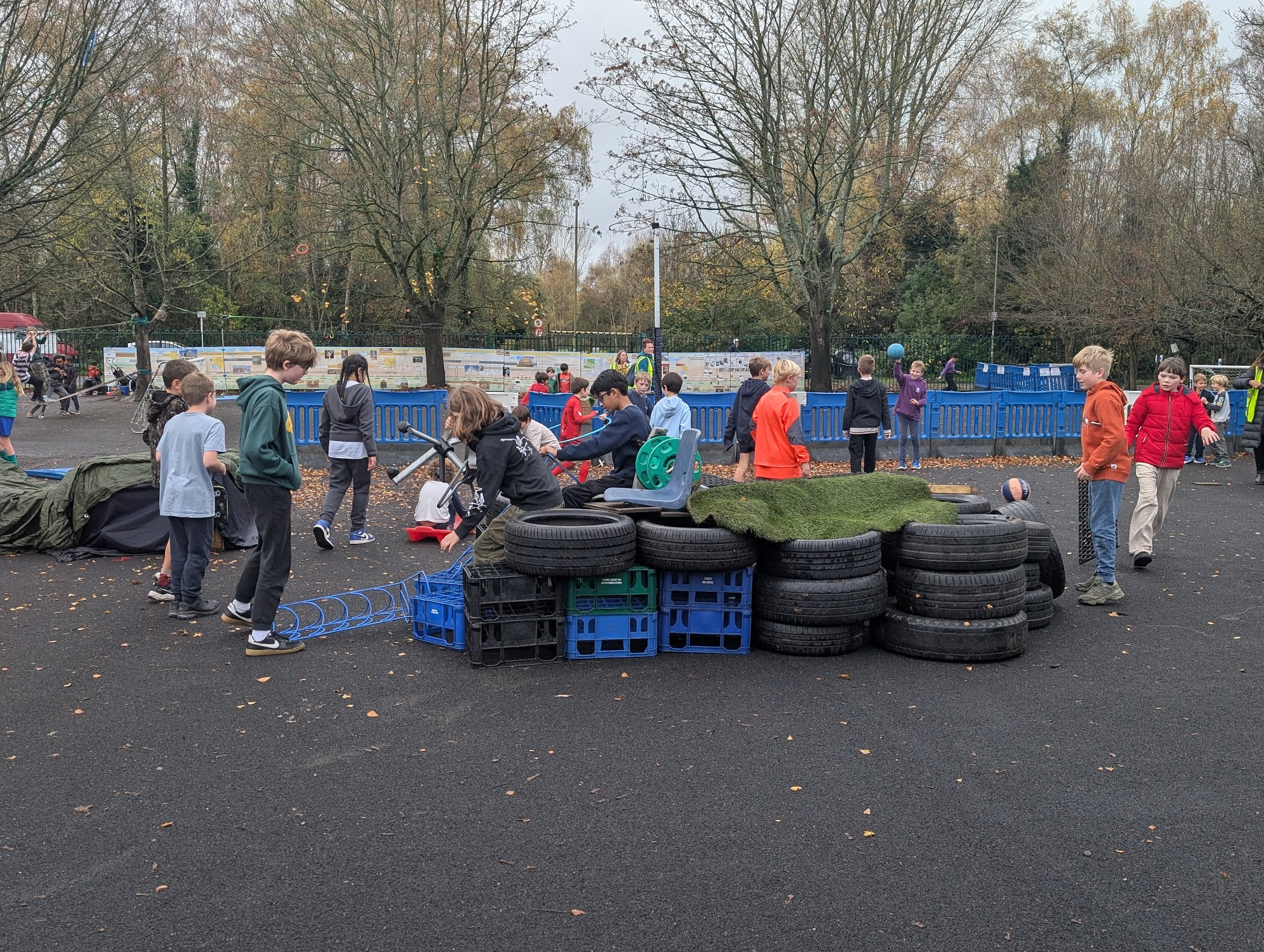
OPAL Play. Year 6 in a deep and creative flow
Tina talked about this with specific reference to OPAL Play (they received the OPAL Play Platinum award in May this year). Following the OPAL programme, “We started small with one crate and a piece of tarpaulin and watched what happened,” she shares. The playground is a sight to behold - an adventure world for adults and children alike, I watch on in awe. Year 6 children creating an aeroplane out of tyres and tarpaulin, children being pulled around on a sledge, tight ropes, buggies and stage curtains - children are in deep flow and with absolutely no judgement or interruption. As I walk around I notice small groups of children sitting in huddles eating their packed lunches, “they can choose to eat their lunch inside or outside” Tina explains.
Autonomy and trust are of key importance with tangible benefit - the children are involving themselves in good chat sitting in buggies, on blocks and tyres whilst they eat, responsibly. Tina explains the risk assessment process for OPAL Play: all staff are trained, and each time a new resource is added to the playground, it is introduced during assembly. The children and staff work together to explore how the resource can be used, identify benefits and potential risks, and agree on ways to mitigate them. Learning happens continuously, whether through passion projects in assemblies, risk assessments, or planning work exhibitions. “We take our play seriously,’ Tina shares, ‘but the children know that they are expected to think and work hard in their lessons.’.
This self-direction is also displayed in year 5. Upon arrival I observe a class of children sitting at tables, on sofas or bean bags and with laptops deeply engaged in research for their english project. Some are in groups, a few in pairs, and some choosing to work independently - it's their choice. They started their english research this morning and were so engaged that the teacher gave them the option to continue, provided they extend the maths lesson the next day, - the teacher is trusted to make this decision.
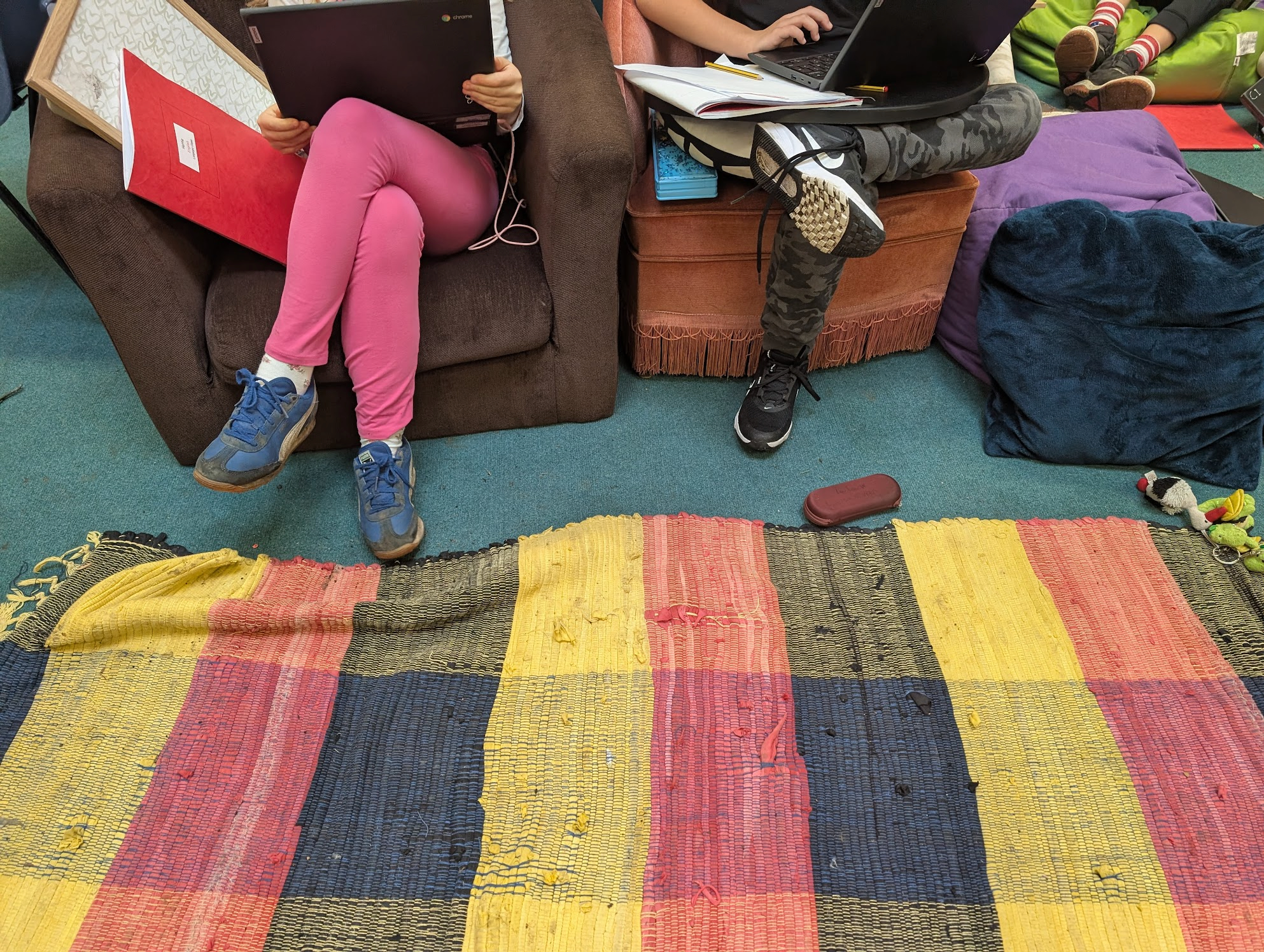
A variety of seating to suit all learners
As I enter the reception classroom the children are stretching and breathing before a phonics session. Tina explains their curriculum journey - author, teacher and trainer, Debra Kidd came to work with the staff teams and developed their ‘Curriculum of Hope’, with Senior Leaders being involved so that they are all accountable, making decisions together. Despite the curriculum working well elsewhere, upon reflection the reception team and Tina have decided to try moving away from projects in January, a move intended to create more child-led learning opportunities, fostering greater autonomy and engagement for their youngest learners and increasing opportunities for oracy and writing. The reception teacher emphasised that she has only felt able to share this desire because of Tina and Clare’s open-door policy - an environment that allows staff to be open and vulnerable at all times.
When I asked Tina where this journey began, she explained that the work she’s done on herself has enabled her to support others on their own journeys. In the spirit of Greg Bottrill's call to reconnect with your inner child, both Tina and Clare have done that personal work and as a result, this school is now on its own journey too. One that includes a school dog (Monty who was in the year 6 classroom calmly watching on), an outdoor classroom, school forest (rec-year 6 have timetabled forest school) and chickens looked after by parents who opt in to ‘Chicken Club’. Are you not tired? I ask, Tina smiles and is keen to share that this has to be a long term project but also states “I can just see so much more potential”. She has big ideas so has to pace herself and her team - too much change too quickly can lead to an unsettled workforce - “things happen organically because our vision for education is so strong," she explains. The outdoor classroom is now available, classes have their timetabled opportunities, “I didn't force teachers to use it, they are coming to it as they are ready and inspiring each other. This happens a lot.”
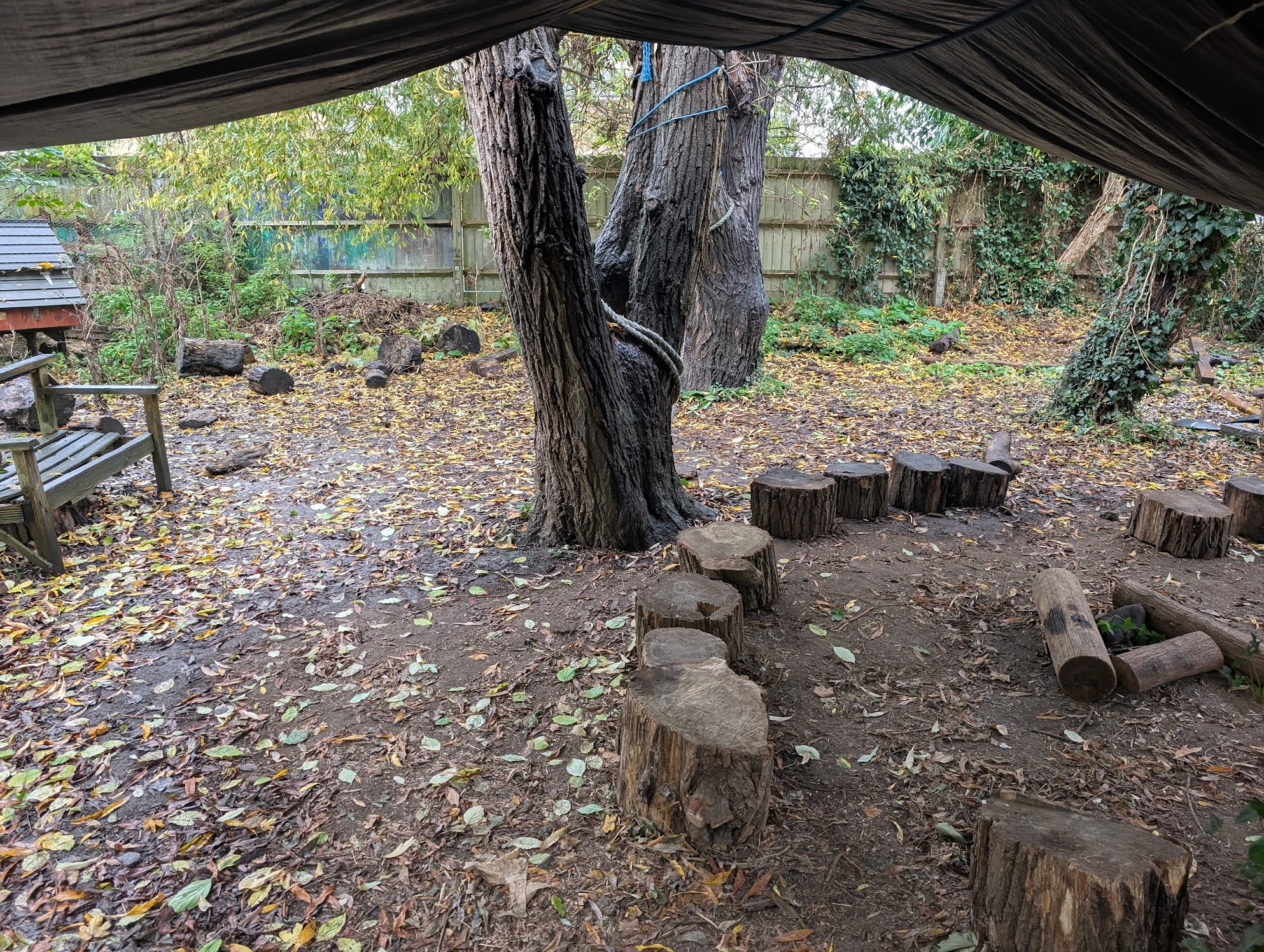
Forest school is timetabled for all children from reception to year 6
This patience seems to have been key to her success. This kind of journey doesn’t come without challenges. Tina recognises that going in too hard on an idea at the start has, of course, led to mistakes, and she acknowledges that she will continue to make them.
As my visit comes to a close I am lucky enough to witness one of the school's Learning Exhibitions (Berger, R. 2003) each year group hosts one per term. A beautiful half an hour of Year 2 children consolidating their learning through explanation and sharing their project work with family and friends - watching their models move with laughter, opening floor books with wonder and showing off Lego models with pride - a real broad and balanced curriculum in action.
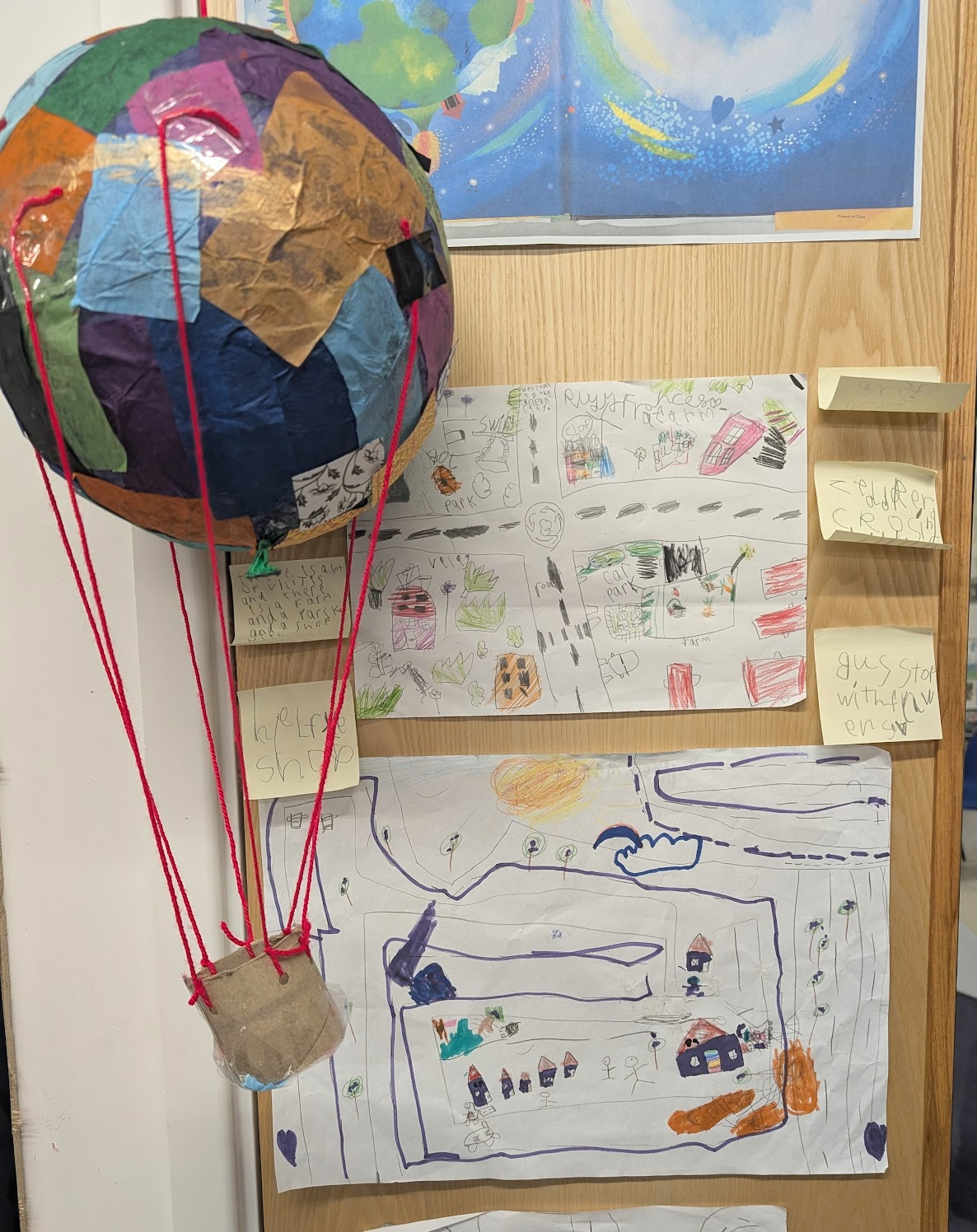
Year 2 Learning Exhibition
From Year 6 children participating in a yoga class to reception class taking a moment to breathe, and from Monty, the school dog, to the chicken pen, it feels like Tina and her team have created a holistic dreamscape - except that this is clearly not Tina's mission. She wants everyone to know that this place can be theirs too, that statutory requirements can be met and at no extra cost. This is not a revolution, just "making small changes with significant impact," a process that is available to everyone.
If St Ebbe's has inspired you, find out how Sophie can support your school through teacher autonomy workshops or one-to-one educator consultations.
References
- Bryce-Clegg, A. 2020. 365 Days of Play.
- Berger, R. 2003. An Ethic of Excellence: Building a Culture of Craftsmanship with Students.